The Best WordPress Theme for Luxury Real Estate Websites (2026 Honest Comparison)
Divi, Elementor, Bricks or Breakdance? Find the best WordPress theme for luxury real estate website in 2026.
Divi, Elementor, Bricks, or Breakdance: what actually works when your clients are comparing you against the top agents in your market.
By Sheikh Hassaan — Website developer for service businesses
Quick Answer
For luxury real estate websites in 2026, Bricks Builder offers the best combination of visual quality, page speed, and IDX compatibility. Elementor is the fastest to launch for non-technical agents. Divi is the most widely installed but requires more configuration to perform well. Breakdance is the highest-ceiling option for agents who want a distinctive, fast site and are working with a developer.
Why Your Theme Choice Is a Business Decision, Not a Design Decision
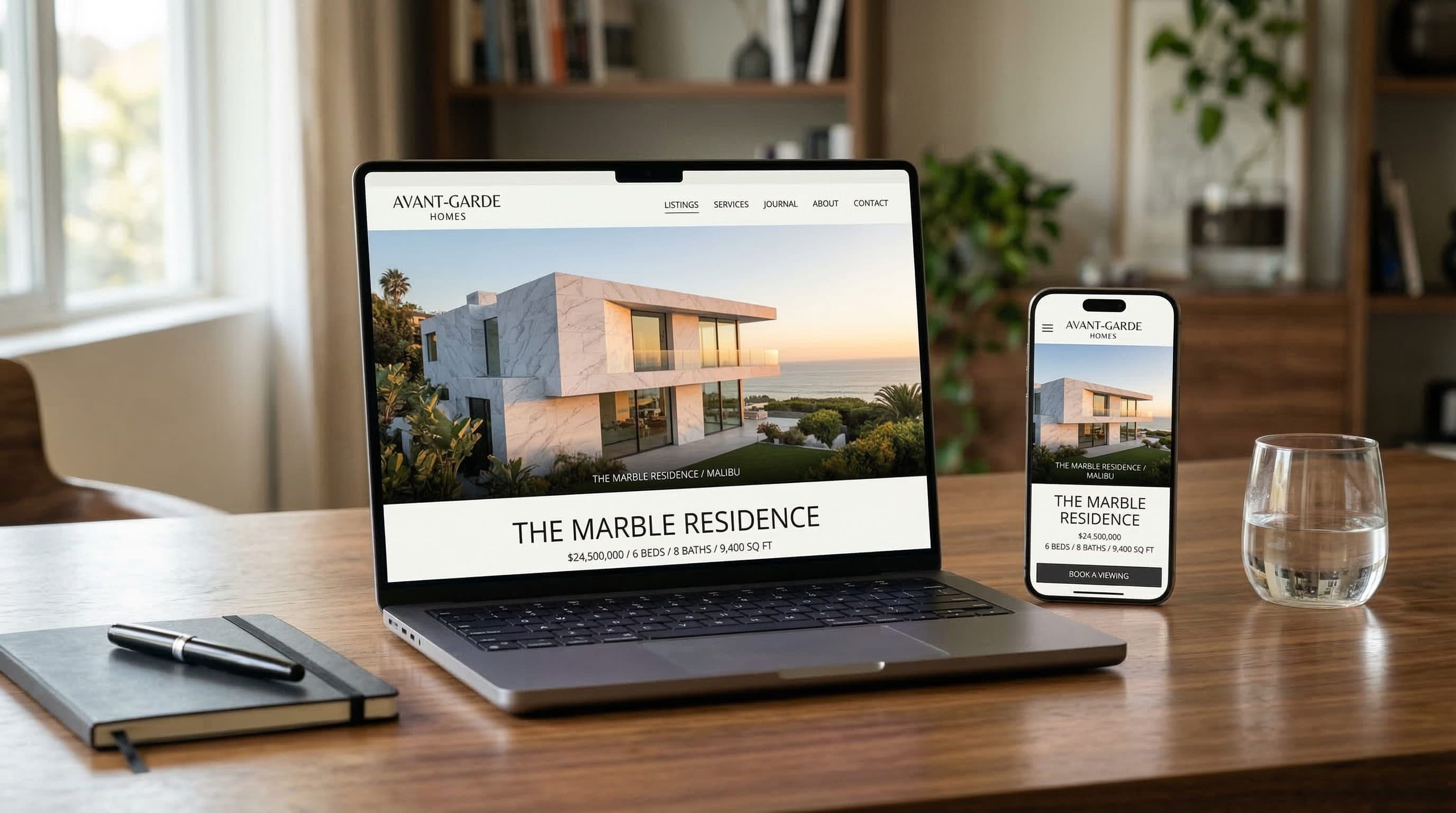
Most theme comparison articles treat this as an aesthetic choice. Pick the one you like the look of. That framing misses the actual stakes for a real estate business.
In luxury property markets, your website is often the first credential a potential seller or buyer sees before agreeing to a meeting. It is not just a place to list properties. It is a silent signal about your standards, your market positioning, and whether you operate at the level your fees suggest. An agent competing for a 2 million dollar listing with a slow, generic-looking website is fighting that conversation before they say a word.
Theme choice affects three things that matter directly to a real estate business: how the site looks on high-resolution screens when a prospective client views it on their phone or desktop, how fast it loads when Google is deciding where to rank it, and how well it integrates with the IDX or property search tools that bring buyers to the site in the first place.
Business reality: A one-second delay in page load time reduces conversions by 7%, according to data from Akamai. For a luxury agent whose site is the first impression before a listing consultation, that delay carries a direct cost in appointments not booked.
The good news is that the choice between the four major WordPress theme builders in 2026 is not that complicated when you frame it correctly. You are not choosing between design software. You are choosing between business tools with different tradeoffs in speed, flexibility, and the skill level required to get the best results.
What to Look for Before You Compare Any Theme
Before evaluating Divi, Elementor, Bricks, or Breakdance, you need to know what a luxury real estate site actually requires technically. Most agents skip this step and end up choosing a theme based on how the demo looks, then discover the gaps later.
Property photography performance
Luxury real estate sites are image-heavy by definition. High-resolution property photos, drone footage thumbnails, and virtual tour previews will slow any site down unless the theme handles image loading correctly. Look for lazy loading support, WebP compatibility, and clean markup that does not add unnecessary render-blocking code around image galleries.
Pro Insight
On every real estate client build I do, I test the theme's gallery performance with 25+ property images before committing to it. A theme that looks fast with three demo photos can crawl when it is carrying a real inventory of listings.
Mobile experience for property browsing
The majority of property browsing happens on mobile devices. A luxury real estate site needs a mobile experience that feels intentional, not squeezed. Full-screen property photo slideshows, tap-to-call buttons for agent contact, and clean neighborhood map displays all need specific mobile consideration that differs from standard business sites.
Page speed as a ranking factor
Google uses Core Web Vitals as a ranking signal. The three metrics that matter most are LCP (how fast the main content loads), FID (how fast it responds to interaction), and CLS (whether elements shift around as the page loads). Some themes are built in ways that inherently hurt these scores. The cleanest theme for design can be the worst for speed if it loads a hundred kilobytes of JavaScript before the page renders.
Most real estate agents I work with prefer having all of this evaluated and configured correctly from day one, so they can focus on listings instead of plugin compatibility spreadsheets.
The 4 Themes I Actually Use and Test on Real Estate Websites

These are not affiliate recommendations. I have built or audited real estate client sites on all four of these platforms in the past 18 months. The scores below reflect real performance data and real configuration time, not marketing claims.
Divi
Best for agents who want the largest template library. Requires configuration to perform well.
Score: 6.5/10
What it is: Divi is the most widely installed WordPress theme builder globally, developed by Elegant Themes. It comes with hundreds of pre-built layouts and a drag-and-drop visual builder that most non-technical users find approachable.
Where it excels: Template variety is unmatched. If you want to launch quickly with a site that looks polished out of the box, Divi has the most real estate-specific layouts available. The pricing model (annual subscription or lifetime) also makes it accessible.
Where it falls short: Divi adds significant code bloat by default. Without specific performance optimisation including disabling dynamic CSS, enabling static CSS file generation, and offloading JavaScript, Divi sites frequently score poorly on Google PageSpeed Insights. The global styles system can also create inconsistencies across pages if the site is built by someone unfamiliar with how Divi's inheritance works.
Pro Insight
On Divi builds for real estate clients, I spend an additional 3-4 hours on performance configuration after the design is complete. That includes enabling Divi's performance features, configuring caching correctly, and removing unused page builder elements from pages that do not need them. Skipping this step is why many Divi sites underperform.
IDX compatibility: Good with most major providers. Some styling conflicts with Showcase IDX require custom CSS to resolve cleanly.
Elementor
Best for agents who want a professional site launched quickly with minimal technical overhead.
Score: 7.5/10
What it is: Elementor is the most widely used page builder plugin for WordPress, with a free version and a paid Pro tier. It works on top of almost any WordPress theme, giving you flexibility in how the underlying site structure is set up.
Where it excels: Speed to launch. Elementor's interface is more intuitive than Divi for most agents building or editing their own site. The template library is extensive, and the Elementor Hello Theme (the minimal base theme recommended for use with Elementor) keeps the code clean and fast. Property listing templates and header configurations are strong.
Where it falls short: Elementor Pro can have performance issues when multiple widgets and animations are used without restraint. The free version lacks several features that luxury-grade sites need, including the full header and footer builder and custom fonts management. There have also been notable security vulnerabilities in Elementor's history that require staying current with updates.
Pro Insight
For non-technical real estate clients who want to make their own content edits after launch, Elementor is the one I recommend most often. The editing interface is close enough to what people expect from word processors that the learning curve is manageable. I set up a training document specific to their site as part of every delivery.
IDX compatibility: Excellent. The cleanest integration with IDX Broker and iHomeFinder of any builder on this list.
Bricks Builder
Best overall for luxury real estate sites where performance and visual quality both matter.
Score: 8.5/10
What it is: Bricks is a newer WordPress theme builder with a one-time purchase model. It functions as both a theme and a builder, meaning it replaces the base WordPress theme entirely rather than sitting on top of one. It is built with performance as a core design principle.
Where it excels: Page speed is significantly better than Divi and Elementor out of the box. Bricks generates clean CSS, loads minimal JavaScript, and produces Core Web Vitals scores that are easier to achieve and maintain. For luxury real estate sites where large property photography is unavoidable, starting with a faster foundation matters. The design flexibility is also exceptional, particularly for custom header layouts, full-screen hero sections, and property card grids that need to look distinctive.
Where it falls short: Bricks has a steeper learning curve than Elementor for non-technical users. The interface is powerful but requires familiarity with how it handles spacing, breakpoints, and global settings. Agents who want to manage their own site post-launch will need more onboarding time. The template library is also smaller than Divi or Elementor, meaning more custom design work is typically required.
Pro Insight
Bricks is what I build on for real estate clients who have a higher budget for initial setup and care deeply about site performance and visual differentiation. The output consistently outperforms Elementor and Divi on Core Web Vitals without additional performance plugins. I pair it with Cloudflare and a lightweight caching setup for results that are hard to match with the other builders.
IDX compatibility: Good with iHomeFinder and IDX Broker. Showcase IDX requires some additional configuration but works well once set up.
Breakdance
Best for agents who want a visually distinctive site and are comfortable working with a developer.
Score: 7.8/10
What it is: Breakdance is a relatively new WordPress site builder from the creators of Oxygen Builder. It launched in 2022 with a focus on clean code, modern design capabilities, and a more intuitive interface than its predecessor. Like Bricks, it functions as its own theme layer.
Where it excels: Breakdance produces some of the cleanest HTML and CSS output of any WordPress builder, which translates directly to strong Core Web Vitals scores. The design capabilities for hero sections, custom property grids, and animated content transitions are excellent. It is the builder I would choose if a client specifically needed something that looks visually distinct from the majority of agent sites in their market.
Where it falls short: Breakdance is the least mature of the four options. The template library is thin. Some edge-case features that established builders handle seamlessly, such as complex header scroll behaviors and multi-step contact forms, require more manual configuration in Breakdance. Community support and third-party tutorial resources are also smaller than Elementor or Divi.
Pro Insight
I use Breakdance on projects where the client is not expecting to edit the site themselves and wants a visual style that stands apart from every other agent site. It is a higher-effort build but the performance and design ceiling is genuinely higher. I would not recommend it for a first-time WordPress site owner without ongoing support.
IDX compatibility: Works with major providers but has the least documentation of the four. Requires testing on a staging environment before deploying any IDX integration.
Common Mistakes Agents Make When Choosing a WordPress Theme
Choosing based on the demo, not the performance data
Theme demo sites are optimised by professionals with high-end hosting, cached assets, and minimal real content. Your live site will not perform the same way. Always run a Google PageSpeed test on the demo URL before committing to a theme. If the demo itself scores below 70 on mobile, the live site will be worse.
Installing more plugins than the theme needs
A common pattern on agent sites: install a theme, add a page builder, add a separate SEO plugin, a separate performance plugin, a separate security plugin, a lead capture plugin, and a chat widget. Each plugin adds load time. A well-configured site with the right theme often needs fewer total plugins than an underperforming site that is trying to compensate with add-ons.
Not testing on mobile during the build
Over 60% of property search traffic comes from mobile devices. A site that is designed on a laptop and only checked on mobile at the end will have layout issues, oversized images, and tap targets that are too small for phone screens. Mobile design should be a parallel process during the build, not a final check.
Treating the theme as permanent
Agents often feel locked into their original theme choice because rebuilding sounds expensive. It does not have to be. A well-structured WordPress site can change its theme layer without losing content, as long as the content is stored correctly in WordPress rather than embedded inside the page builder. This is another reason why structure matters more than which theme you pick.
The Exact Stack I Use for Luxury Real Estate Client Websites
This is the configuration I deliver on every real estate site I build at the $449 price point. Not aspirational. This is what goes into production.
Theme and builder
Bricks Builder on the Bricks theme base. No secondary theme layer. Clean foundation with no unused code. This gives the best Core Web Vitals baseline before any performance plugins are needed.
Hosting
Hostinger Business or SiteGround GrowBig at minimum, depending on the client's budget and expected traffic. Both include LiteSpeed caching at the server level, which pairs well with Bricks' lean code output. I do not build real estate sites on shared bargain hosting regardless of the client's budget pressure.
Performance
- Cloudflare Free CDN and DNS-level protection
- LiteSpeed Cache or WP Rocket depending on the host
- WebP image conversion active on all uploaded property photos
- Lazy loading enabled on all below-fold images
- No page builder JavaScript loaded on pages that do not use it
Lead capture
WPForms Lite for contact and inquiry forms. Connected to the agent's CRM or email directly. Property enquiry forms on listing pages, neighbourhood guides, and the contact page. Every form submission triggers a confirmation email to the prospect immediately.
Security and maintenance
- Wordfence security plugin with extended firewall
- UpdraftPlus daily backups to cloud storage
- SSL active and enforced
- Weekly plugin and WordPress core updates on schedule
- Uptime monitoring with instant alerts
Frequently Asked Questions
What is the best WordPress theme for a real estate website in 2026?
Bricks Builder is the best option for luxury real estate websites in 2026 when performance and design quality are both priorities. Elementor is the better choice for agents who want to manage their own content after launch, due to its more approachable editing interface.
Can I use Divi for a luxury real estate website?
Yes, Divi can work well for luxury real estate websites, but it requires additional performance configuration to compete with newer builders like Bricks on page speed. The template library is the most extensive of any WordPress builder, which can accelerate the design phase significantly.
Does my WordPress theme affect how my real estate site ranks on Google?
Yes, your theme directly affects SEO performance through Core Web Vitals scores, which Google uses as a ranking signal. Themes that load slowly, generate excessive JavaScript, or produce unstable layouts on mobile will rank below faster, cleaner-coded alternatives with equivalent content.
Do I need a special WordPress theme to use IDX property search?
You do not need a theme specifically designed for IDX, but you need a theme that is compatible with your chosen IDX plugin and can be styled to match. Elementor and Bricks both offer clean IDX integration with the major providers. Avoid themes with heavy front-end frameworks that can conflict with IDX JavaScript.
How much does a professional luxury real estate WordPress website cost?
A professionally built luxury real estate WordPress website ranges from $449 for a fixed-price done-for-you package to $8,000 or more for a custom agency build. The primary difference is turnaround time, scope of customisation, and whether ongoing maintenance is included. Most agents do not need an agency-level build to compete effectively in their market.