Luxury Real Estate Web Design for Agents in 2026: What Your Site Actually Needs
Luxury real estate web design in 2026: what high-end agents need beyond good looks. The design, conversion, and SEO elements that actually generate listings.
A luxury real estate website needs more than good photography and a clean layout. It needs specific design decisions that signal credibility to high-net-worth clients and convert their visits into enquiries.
By Sheikh Hassaan — Website developer for service businesses
Quick Answer
Luxury real estate web design in 2026 requires: a specific market positioning headline, a fast-loading layout that showcases high-quality property photography without slowing the site, trust signals calibrated for high-net-worth clients including named testimonials and sold portfolio, a clear above-fold CTA on every page, area pages for local SEO, and a mobile experience that performs as well as desktop. Design quality matters in the luxury market. Conversion structure matters more.
Why Luxury Real Estate Web Design Is Different From Standard Property Websites
A standard real estate website serves two functions: displaying available listings and providing contact information. A luxury real estate website serves a different function: positioning the agent as the obvious choice for a high-net-worth buyer or seller who is simultaneously evaluating three or four other agents online.
This distinction changes everything about how the site should be designed. A standard property site competes on inventory and convenience. A luxury real estate site competes on credibility, expertise, and brand. The buyer searching for a three-bedroom apartment at $350,000 wants to see listings. The seller considering listing a $5 million property wants to see evidence that this agent knows their market, has sold comparable properties, and represents the kind of professional presence the sale deserves.
Most luxury real estate websites fail this evaluation not because they look bad but because they look the same as every other agent site in the market. Identical template structures. Generic welcome messages. Stock photography of office meetings. Testimonials that say excellent service without specifying what the service achieved. The visual quality of the site signals premium. Everything else signals generic.
In 2026, high-net-worth clients conduct more due diligence online before making contact than at any previous point. A client who finds three agents through a referral will visit all three websites before deciding who to call. The agent with the most credible, specific, and differentiated digital presence wins that first contact. That first contact is where the listing begins.
What Luxury Real Estate Web Design Looks Like in Practice
Step 1: Define the Agent's Market Position Before Designing Anything
What to do: Before choosing a theme, selecting colours, or writing a single word of copy, define three things precisely. The specific geographic market the agent serves. The specific client type they serve best: international buyers, upsizing families, probate and estate sales, new development. The specific outcome they deliver better than competitors in that market. These three elements are the foundation of every design decision that follows.
Why it matters: A site designed without a clear market position looks like every other agent site because it is trying to appeal to every possible client. A site designed around a specific position looks distinctive because every element from the headline to the colour palette to the testimonials reinforces the same message. Distinctiveness in the luxury market is not a design preference. It is a competitive necessity.
Pro Insight:
Write the homepage headline before briefing any designer or starting any build. If you cannot write a specific headline that names your market, your client type, and your competitive advantage in one sentence, the positioning work is not done yet. Designing before the positioning is clear produces a site that looks finished and communicates nothing specific.
Step 2: Choose a Visual Language That Matches the Market Tier
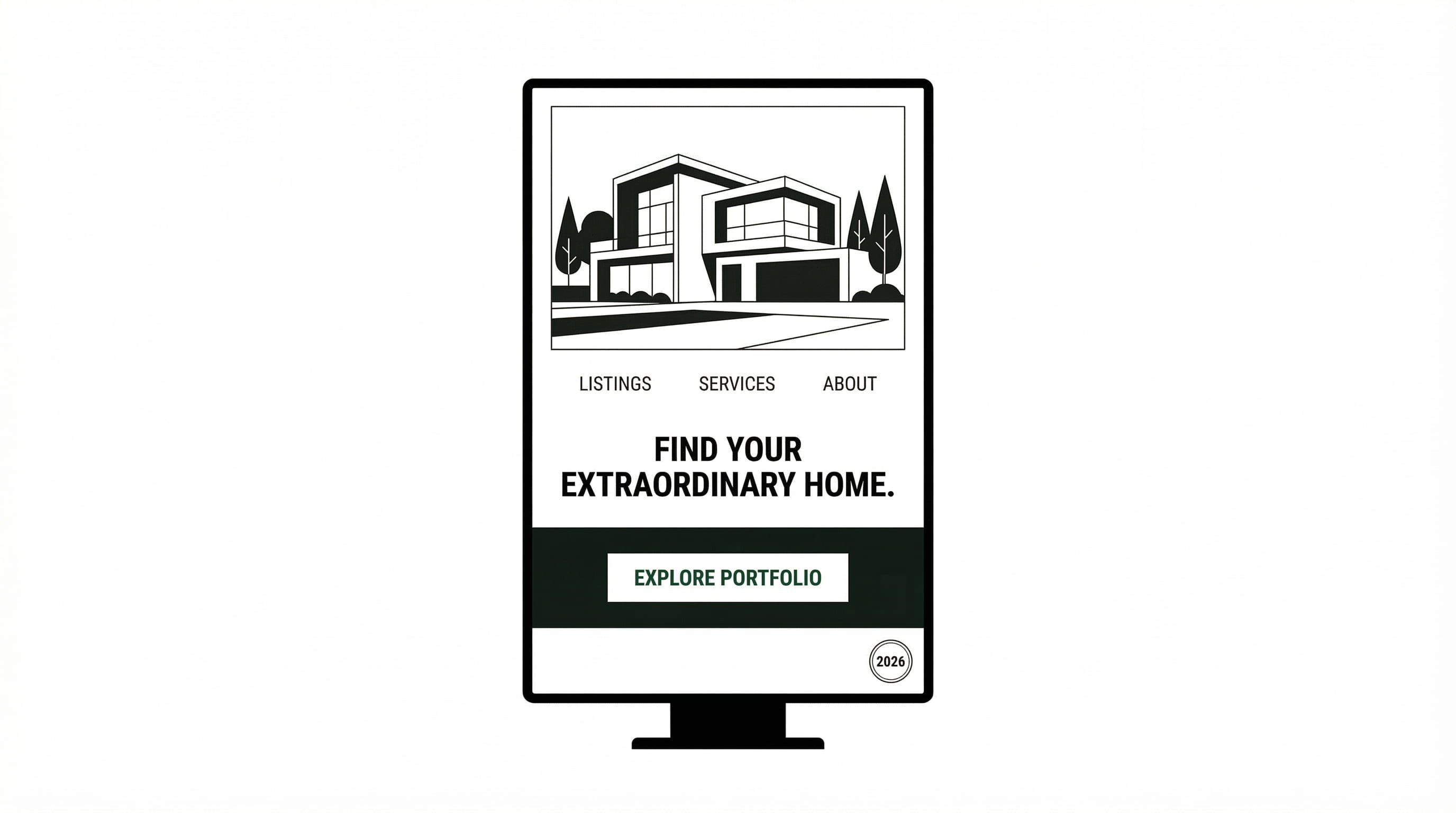
What to do: Luxury real estate visual design in 2026 is characterised by restraint rather than elaboration. White space, minimal navigation, large high-quality photography, and a limited colour palette. The typography should be clean and highly readable on all screen sizes, not decorative. The primary accent colour, often a deep navy, forest green, warm gold, or charcoal, should reflect the specific market character rather than defaulting to the theme's preset palette.
Why it matters: The visual language of a site communicates the agent's understanding of the market they serve before a visitor reads a single word. A cluttered layout with multiple competing colours signals a general practice agent. A restrained, precise layout with a deliberate colour palette and generous white space signals a specialist. High-net-worth clients read these signals instantly and unconsciously. The visual language is the first thing they judge.
Pro Insight:
The most common visual mistake on luxury real estate sites is overusing accent colours. A site with five different colours in the navigation, buttons, section backgrounds, and typography has no visual hierarchy. A site with one primary colour, one accent, and a neutral base communicates intentionality. Restraint signals confidence. Visual noise signals uncertainty.
Step 3: Build Trust Signals for a High-Net-Worth Audience

What to do: Trust signals for luxury real estate must be specific and verifiable. A named testimonial from a client whose property is identified by area and transaction size carries real weight. A sold property example showing listing price, sale outcome relative to asking, and days to sale is concrete evidence of performance. The agent's headshot should be professional, current, and positioned prominently on the homepage, not buried in an about page that most visitors never reach.
Why it matters: A high-net-worth client evaluating agents is conducting due diligence. They are not looking for social proof in the consumer sense of counting reviews. They are looking for specific evidence that the agent has performed well in comparable situations. Generic testimonials and achievement badges from industry organisations provide no specific evidence. Named outcomes from identifiable transactions provide exactly the evidence that moves a serious seller from visiting the site to making contact.
Pro Insight:
Three specific testimonials outperform twenty generic ones. When requesting testimonials from past clients, ask them to describe: what property they sold or bought, what the outcome was relative to their expectations, and how quickly it was achieved. A testimonial with those three elements is worth more than an entire section of five-star ratings without context.
Step 4: Design for Mobile Without Compromising Property Photography
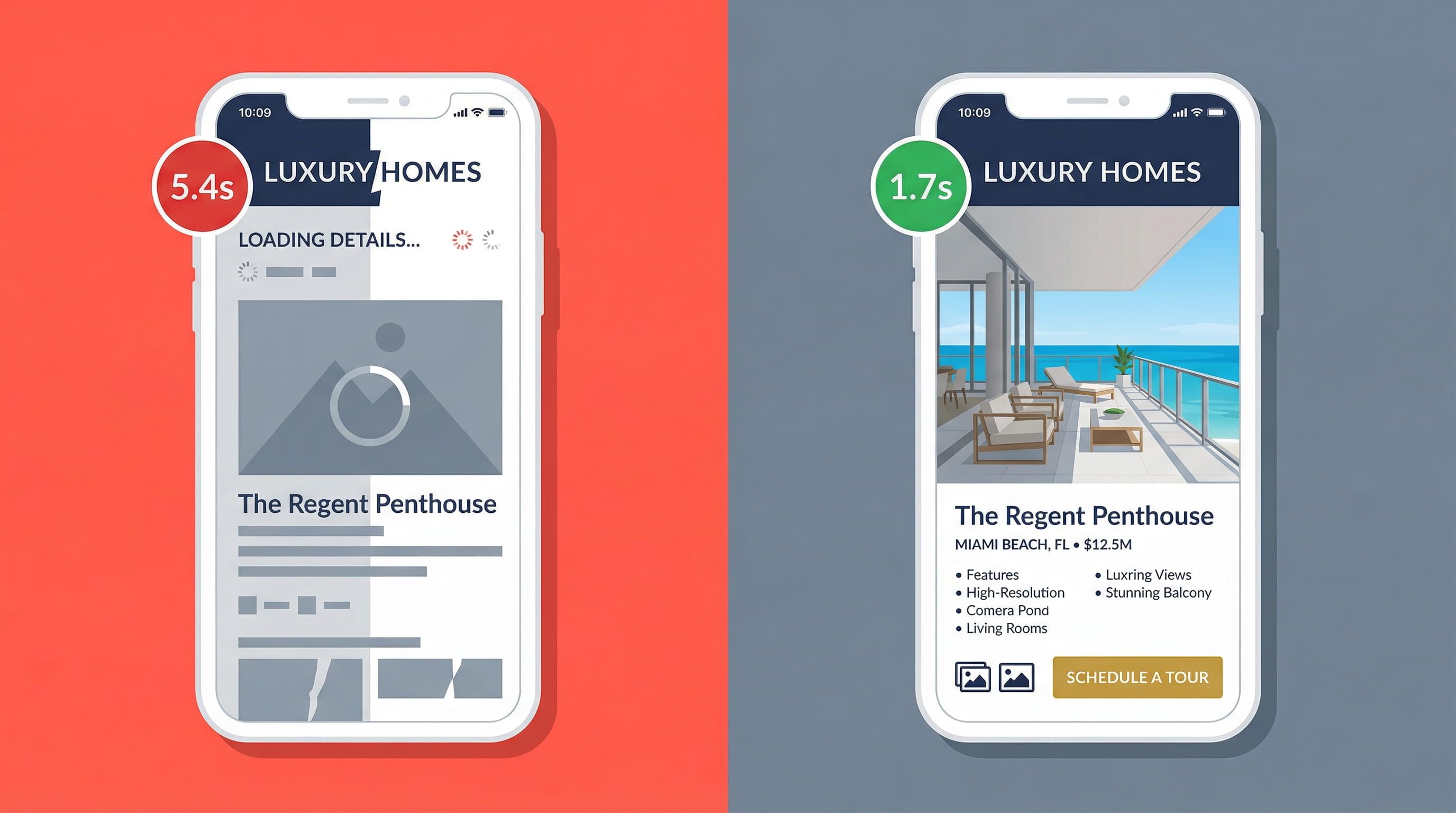
What to do: Property photography is the primary visual asset of any real estate site and the primary performance risk. The solution to both is the same: compress every image to under 200KB before upload, use lazy loading for gallery images below the fold, and test the site on an actual mobile device rather than a desktop browser's responsive preview. The mobile experience should feel intentional, not like a desktop layout that has been squeezed to fit a smaller screen.
Why it matters: More than 60 percent of real estate website visits happen on mobile. A luxury property site that loads beautifully on a desktop and renders awkwardly on a phone is failing its primary audience. High-net-worth clients in 2026 use phones as their primary research device. A site that performs poorly on mobile signals a lack of attention to detail that contradicts the premium positioning the agent is trying to establish.
Pro Insight:
Test the contact form on mobile specifically and submit it as a real enquiry. This is the most skipped test in real estate web development and the most consequential. A form that cannot be completed on mobile because a field extends off-screen or the submit button is not visible without horizontal scrolling is eliminating a significant share of potential enquiries from the most common device type.
Step 5: Layer Local SEO Into the Design Structure
What to do: Local SEO for luxury real estate is built into the site's page structure, not added after design as a technical afterthought. During the build, create a dedicated page for each geographic area the agent actively serves. Each page should be positioned as a resource for buyers and sellers in that area, with specific market content rather than generic agency copy. The homepage title tag should include the agent's primary market and property type specialism. Every area page title tag should name the location and the service.
Why it matters: The design of a luxury real estate site and its ability to rank in local search are not separate concerns. The page structure, the internal linking between area pages and the homepage, the schema markup, and the meta information are all design decisions that determine whether the site is visible in the searches that generate the most qualified leads. An agent whose site is beautifully designed but structurally invisible in local search is missing the clients who are most likely to convert.
Pro Insight:
The navigation menu is a local SEO asset, not just a design element. Including area names in the navigation as links to dedicated area pages creates an internal link structure that signals geographic relevance to search engines. A navigation item labeled Areas We Cover linking to individual area pages is more valuable for local search than any amount of off-page optimisation.
Step 6: Configure Performance and Security Before Launch
What to do: No luxury real estate site should go live without SSL active, a security plugin configured on Extended Protection mode, daily automated backups running, and a performance test confirming load time under three seconds on mobile. These are not post-launch tasks. They are launch requirements. A site that goes live without this configuration is a site that is already behind on the operational standards a professional digital presence requires.
Why it matters: For a luxury real estate agent, a compromised website is not just a technical inconvenience. It is a brand crisis. A site showing malware warnings to visiting clients, or a site that goes down during business hours with no monitoring in place, signals a level of disorganisation that contradicts the premium positioning the agent has invested in building. Security and performance are brand assets in the luxury market, not optional technical extras.
Pro Insight:
Set up UptimeRobot monitoring with SMS alerts before the site launches, not after. An agent who discovers their site has been down for six hours because a client mentioned it is an agent who has spent six hours with their primary credibility asset offline. Five minutes of monitoring setup eliminates that scenario entirely.
Common Design Mistakes That Cost Luxury Agents Listings
Prioritising Visual Complexity Over Load Speed
Elaborate animations, parallax scrolling effects, full-screen video backgrounds, and layered visual elements add code weight that damages load time. A luxury real estate site with a five-second load time on mobile is not a premium experience regardless of how impressive the design looks at full desktop speed on a fast connection. In 2026, mobile performance is the design standard. A site that sacrifices load speed for visual drama is making the wrong trade.
Using Generic Photography on a Premium Site
Stock photography of handshakes, city skylines, and office meetings has no place on a luxury real estate agent's website. The photography on the site should be property photography from the agent's own portfolio, the agent's own professional headshot, and optionally lifestyle imagery that reflects the specific market and location served. Generic stock imagery signals a site that was assembled from templates rather than built around a specific agent's brand and market.
No Differentiation Between Desktop and Mobile CTAs
The primary CTA on desktop can be a prominent button in the hero section. On mobile, the highest-converting CTA is a click-to-call phone number positioned at the top of the screen. Most real estate clients searching on mobile want to call, not fill a form. A site that provides only a contact form with no visible phone number is adding friction for the most action-ready segment of mobile visitors.
Building the Site Around the Agency Brand Instead of the Agent
In luxury real estate, clients hire agents, not agencies. A site built around an agency logo, agency colours, and agency copy with the individual agent barely visible is misaligned with the way luxury transactions actually happen. The agent's name, face, credentials, and market commentary should be the primary brand elements on the site. The agency affiliation can be secondary information. High-net-worth clients want to know who they are hiring, not which office that person works from.
The Exact Stack Used on Luxury Real Estate Client Sites
- Theme: Astra or GeneratePress, lightweight base configured to the agent's visual identity
- Visual design: Limited palette of two to three colours, one serif or clean sans-serif headline font, generous white space, full-width property photography with lazy loading
- Homepage structure: Specific positioning headline above fold, agent headshot, Book a Valuation CTA, three trust signal elements, available listings preview, sold portfolio preview, area market commentary
- Performance: ShortPixel image compression, WP Rocket caching, Cloudflare CDN, target under 2 seconds on mobile
- Local SEO: Rank Math for per-page SEO control, area pages for each target market, LocalBusiness schema on homepage, Google Business Profile linked
- Trust: Named testimonials section with outcomes, sold portfolio with transaction details, agent credentials and market experience stated specifically
- Conversion: Specific above-fold CTA on every page, three-field contact form, click-to-call phone number visible on mobile
- Security: Solid Security or Wordfence Extended Protection, 2FA on admin accounts, daily UpdraftPlus backups to Google Drive
- Monitoring: UptimeRobot with SMS alerts, Google Analytics 4 with form and phone click goals
A site built on this stack looks premium, loads fast, ranks for local searches, and converts qualified visitors into enquiries. It is not the most visually elaborate real estate site a visitor will see. It is the most credible, most functional, and most likely to generate the first call that leads to a listing.
Don't Have Time to Deal With This?

This guide covers what luxury real estate web design actually requires in 2026: specific positioning, deliberate visual language, trust signals calibrated for the luxury market, a mobile experience that performs rather than just displays, local SEO built into the structure, and a security and performance foundation that protects the brand.
The $449 WordPress Website Package delivers this for luxury agents and service business owners who want a site built correctly from the start. Every element in the stack above is configured before the site goes live. No agency overhead. No ongoing retainer. One fixed price.
About the Author
Sheikh Hassaan — Website Developer for Small Businesses
I help service businesses launch fast, secure, conversion-focused WordPress websites without the agency price tag. I've built sites for coaches, consultants, local service providers, and founders who need something professional that actually works, not a DIY project that becomes a second job.
Related Articles
- The Luxury Real Estate Website Checklist Every Agent Should Print Out (2026)
- Your Real Estate Website Is Not Getting Leads
- Is a Done-for-You WordPress Website Worth It for Real Estate Agents?
Frequently Asked Questions
What should a luxury real estate website include in 2026?
A luxury real estate website in 2026 needs a specific market positioning headline, professional agent headshot above the fold, named testimonials with transaction outcomes, a sold property portfolio, dedicated area pages for each target market, a fast-loading mobile experience with compressed property photography, and a specific above-fold CTA on every page. Design quality signals premium positioning but conversion structure is what generates enquiries.
How much does luxury real estate web design cost?
Luxury real estate web design ranges from $449 for a fixed-price professional package to $5,000 or more for an agency build. The price difference reflects overhead and process, not necessarily quality. A fixed-price build from an experienced developer who specialises in service business sites often delivers better conversion performance than an agency build at ten times the cost.
What is the best WordPress theme for luxury real estate websites?
Lightweight base themes such as Astra and GeneratePress perform better than real estate specific themes for luxury agent sites. They load faster, give full design control without code bloat, and receive regular security updates. Real estate specific themes are built to impress in marketplace previews and often sacrifice load speed for visual complexity.
How do I make my real estate website look luxury?
Use a limited colour palette of two to three colours, generous white space, large high-quality property photography compressed for fast loading, clean readable typography rather than decorative fonts, and a minimal navigation structure. Restraint communicates confidence in the luxury market. Visual complexity communicates the opposite.
Does a luxury real estate website need IDX integration?
Not necessarily. Most luxury agents manage a curated portfolio of high-value listings rather than a high-volume inventory, making a manually maintained property portfolio a better fit than a live IDX feed. IDX adds monthly subscription cost, slows the site, and limits SEO control over property pages. For luxury specialists, a non-IDX site with full SEO control typically performs better.